

RT8100NM terminates a N line in 50 ohms through a male interface, taking 100 W from DC to 8.5 GHz.
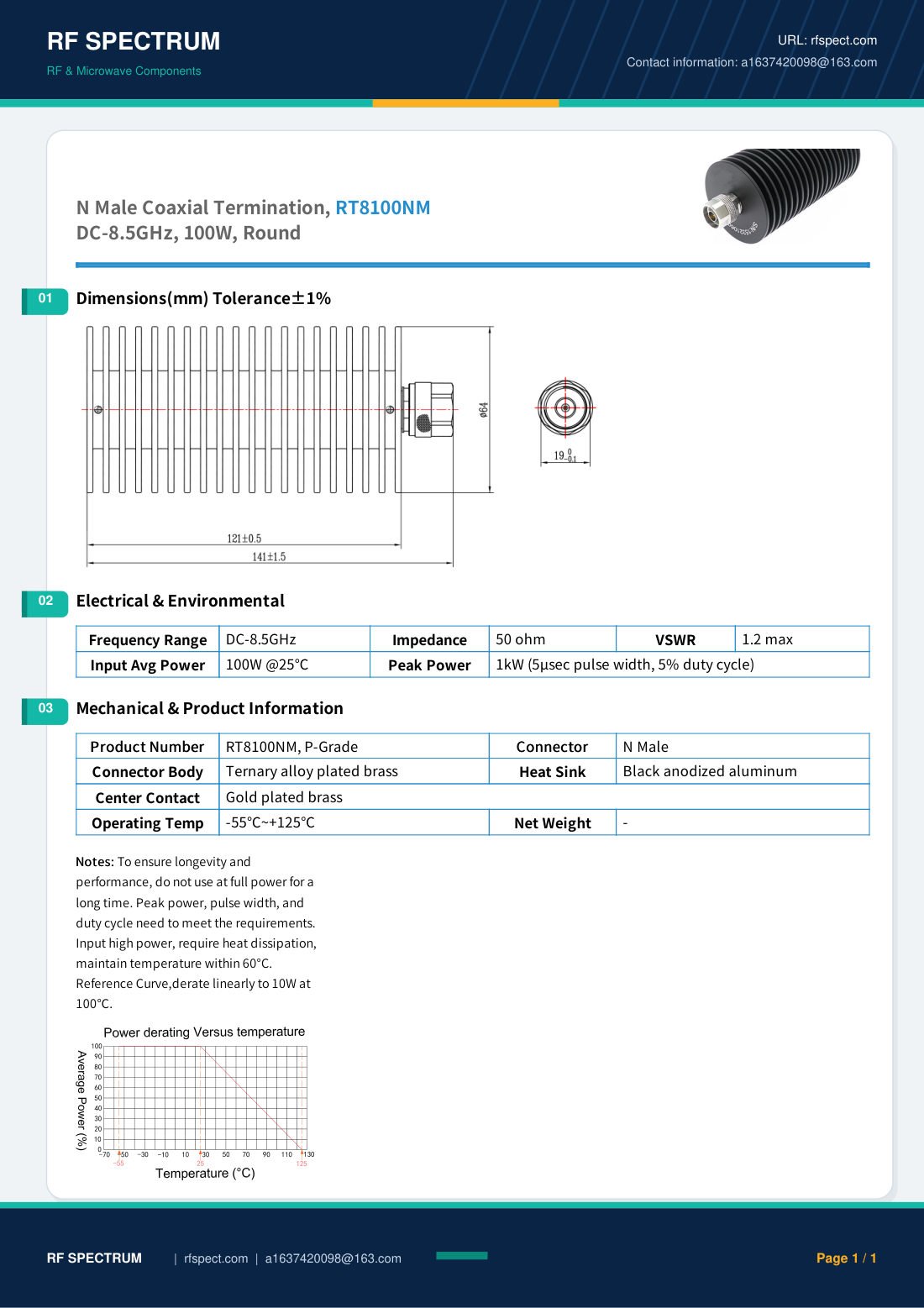
Dissipation at this level needs real thermal mass, so the element lives inside a heavy heatsink body; the surface area you see is what carries the heat away.
From DC to 8.5 GHz the termination holds its VSWR figure; above the limit the match degrades, which matters if you rely on the load to absorb reflected power.
Key numbers: 100 W dissipation; VSWR 1.2:1 max; 50 ohm impedance; DC to 8.5 GHz; ternary alloy plated brass body.
Typical use is leaving an unused port terminated, dummy-loading a transmitter during alignment, or providing a stable 50 ohm sink at the far end of a line under test.
FAQ – What VSWR should I expect? The figure in the specs below is the guaranteed maximum across the band; a healthy termination typically measures better on the bench.
FAQ – Is ‘dummy load’ something different again? It is a third name for the same component: a connectorised resistor that soaks up RF power instead of reflecting it.
The round in-line body suits panel jacks and bench use, where it hangs on the port and convects freely.
FAQ – Does mounting orientation matter? For the finned bodies, yes: they are rated to convect with the fins vertical. Enclosing one or mounting it against a panel cuts the rating.


Reviews
There are no reviews yet.