
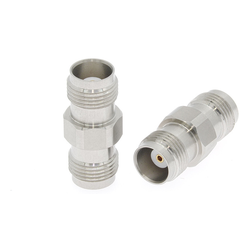

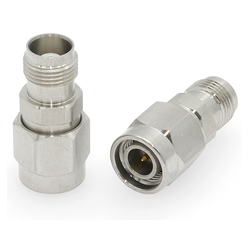

TNCA Adapter
TNCA adapters are the shortest way to change gender, series or direction on a TNCA line. RFSPECT lists 22 configurations here, all 50 Ω and specified DC to 18 GHz, with transitions to TNC, SMA and N.
The mating interface is threaded, TNC-derived — the 18 GHz TNC derivative. Because each part is machined as a single body rather than assembled from a connector plus a barrel, the centre pin stays concentric under torque and VSWR stays low across the band.
• Frequency: DC to 18 GHz
• Impedance: 50 Ω nominal
• Interface: threaded, TNC-derived
• Transitions: TNCA to TNC, SMA and N
• Gender: male-to-female, male-to-male and female-to-female
• Body / plating: passivated stainless steel, nickel-plated brass and gold-plated brass bodies
• Grades stocked: Ultra / Economy
• Body styles: straight, right angle 90° and 4-hole flange
They turn up on VNA ports, in test fixtures, and at the end of cable assemblies made up in a different series. If the adapter sits inside a measurement, take Precision or Ultra; if it only has to carry a signal from one lead to another, Economy does it for less.
Frequently asked questions
Which gender combination do I need?
Count the genders on the two ports you want to join: male-to-male needs a female body at both ends, female-to-female needs a male body, and a mixed pair takes the male-to-female part. Every listing above states its pairing in the title.
Can a TNCA adapter be used in either direction?
Yes. An adapter is a passive reciprocal two-port, so it works the same way round; only the connector genders decide which end goes where. A TNCA line does not care which side the signal arrives from.
Will an adapter damage a mismatched port?
No. The risk is mechanical, not electrical: repeatedly mating an adapter with a worn or dirty interface is what wears a port out, which is why a sacrificial adapter on an instrument is cheaper than a repair.
See also SMA Adapter, N Adapter, 2.92mm Adapter, 3.5mm Adapter and RF adapter overview.
Showing all 22 results


