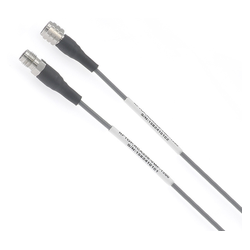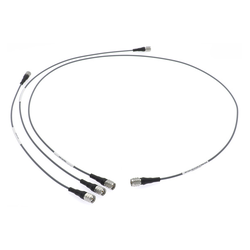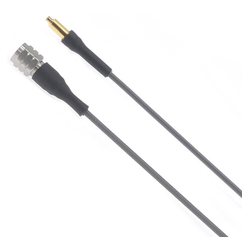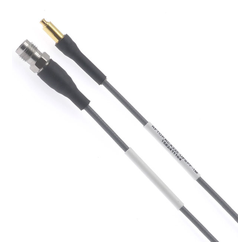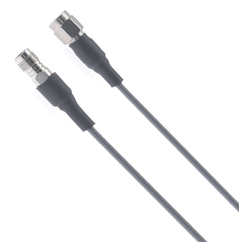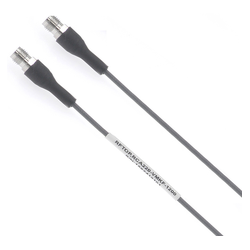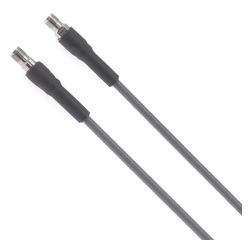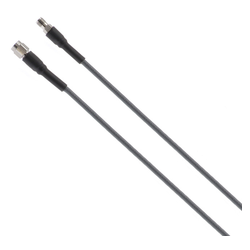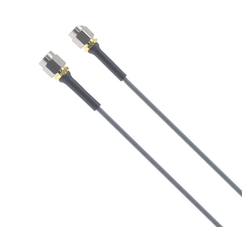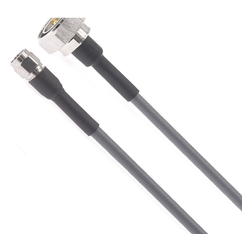


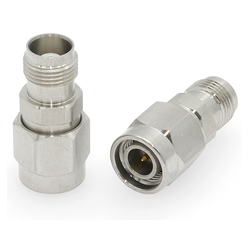

RCA Ultra-Low-Loss Phase-Stable Cable Assembly
This series is the phase-stable, ultra-low-loss half of the cable assembly catalogue: 105 builds on RCA cable, terminated on SMA, N, 2.92mm, 3.5mm, 1.85mm and TNC, cut to the length you specify and tested before dispatch. The cable is the part that sets the ceiling, and the series runs from a 3.1 mm jacket good to 55 GHz down to a 12 mm jacket for long, low-frequency runs.
What makes it a measurement cable rather than hook-up wire is phase stability: the electrical length stays put when the cable is flexed and when the temperature moves. That property is what a VNA calibration depends on, and it is why these assemblies are used inside test paths, antenna ranges and EMC set-ups rather than as general interconnects.
Quick selection guide
RCA146 / RCA220 | 1.85mm and 2.4mm ends | DC-67 GHz | the 67 GHz VNA runs; thinnest jacket that still reaches V band
RCA310 | 3.1 mm | DC-55 GHz | 55 GHz test paths where bend radius is tight
RCA360 | 3.6 mm | DC-43 GHz | the general-purpose precision test cable, 2.92mm and 2.4mm ends
RCA400 | 4.0 mm | DC-40 GHz | K-band runs that need a little more loss margin
RCA480 | 4.8 mm | DC-31 GHz | bench and rack runs to Ka band
RCA510 | 5.1 mm | DC-29 GHz | longer runs where loss per metre starts to matter
RCA540 | 5.4 mm | DC-26.5 GHz | 26.5 GHz system wiring
RCA740 | 7.4 mm | DC-20 GHz | permanent rack and cabinet interconnects
RCA800 / RCA800S / RCA810 | 7.8-8.1 mm | DC-18 GHz | high-flex and general 18 GHz runs
RCA1200 | 12 mm | DC-10 GHz | long low-loss runs where a thick jacket is acceptable
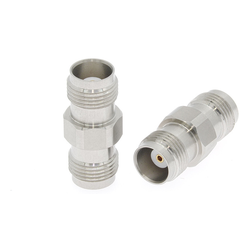
Connector options follow the cable: SMA, N, 2.92mm, 3.5mm, 1.85mm and TNC, in straight and right-angle bodies where the interface allows, so one assembly can leave an instrument on one end and reach a fixture on the other.
Three rules that decide the assembly
Choose by bend radius and length first, loss second. A thin cable loses more per metre but survives a tight route; a thick one has lower loss and will not bend. The cable that fits the route is the one that gets used.
Do not buy phase stability you do not need. Inside a calibration path, phase drift is an error term; on a production line feeding a DUT, it is irrelevant and the economy series does the same job for less.
Check the loss budget at the top of the band before fixing the length. At 40 GHz a long run can lose more than the measurement can afford, and the fix is a shorter cable or a lower-loss jacket, not a better connector.
Frequently asked questions
What length can I order?
Assemblies are cut to order, so give the length and the connector pair and the part is built and tested to that length. Very short assemblies are limited by the bend radius of the cable, very long ones by loss at the top of the band.
How is phase stability specified?
It describes how much the electrical length changes when the cable is flexed or the temperature moves. This series is characterised for that behaviour, which is what makes it usable inside a measurement path where the reference plane has to stay put.
Can a damaged assembly be repaired?
Connectorised assemblies can usually be re-terminated once, provided enough cable length is left. Armor-jacketed and semi-rigid types are less forgiving, so on a short assembly replacement is often faster than a rebuild.
See also RCP Armored Series Cable Assembly and RCT High-Performance Test Cable Assembly and RCV VNA-Dedicated Cable Assembly and RCE Economy Ultra-Flexible Cable Assembly and Cable assembly overview and our precision connector guide for the connector side of the same decision.
Showing 1–40 of 105 results