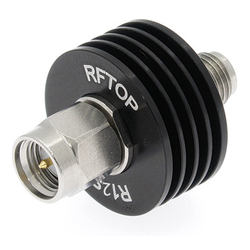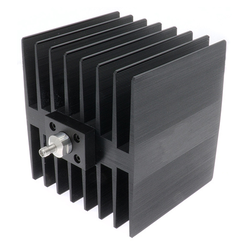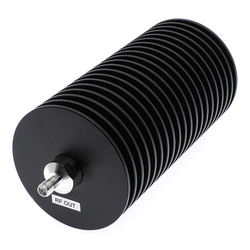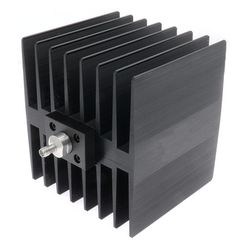

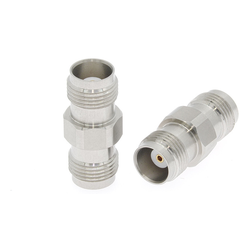

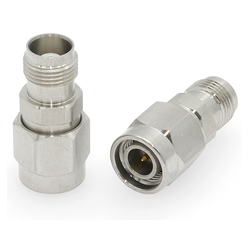

SMA Attenuator
Fixed and variable attenuation on the bench’s most common interface: this page carries 97 SMA attenuators, 50 ohm, covering DC to 18 GHz as standard with variants specified to 26.5 GHz. Fixed values start at 0.5 dB and run in fine steps; variable and push-button bodies cover ranges up to 0-90 dB in 1 dB steps, with high-attenuation parts reaching 110 dB.
Power is the first filter: bodies here run from 0.2 W signal-level parts to 100 W high-power versions, so the same interface serves a VNA port and a transmitter output stage. Special builds include cryogenic and non-magnetic variants for quantum and MRI-adjacent work. Plating is gold-plated beryllium copper, passivated stainless steel, tri-metal plated brass and gold-plated brass.
Quick selection guide — SMA attenuator families on this page:
Fixed, low power (0.2-2 W) | DC–18/26.5 GHz | 0.5-30 dB | VNA and signal-source levelling
Fixed, medium power (5-30 W) | DC–18 GHz | 1-60 dB | driver and PA output stages
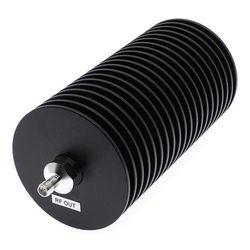
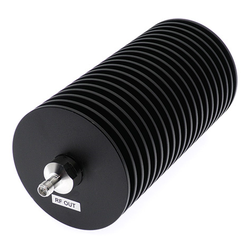
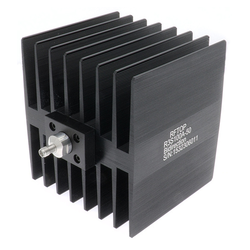
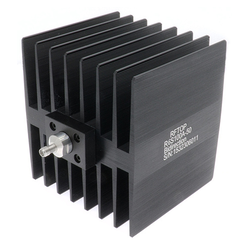
Fixed, high power (50-100 W) | DC–18 GHz | 10-60 dB | transmitter output sampling
Variable 0-30 dB | DC–18 GHz | manual rotary | bench signal adjustment
Push-button 0-90 dB in 1 dB steps | DC–12.4 GHz | front-panel programmable setups
High-attenuation 70-110 dB | DC–4 GHz | receiver blocking and isolation tests
Cryogenic / non-magnetic | DC–18 GHz | quantum computing and magnetically sensitive rigs
Choose the power rating first and the frequency second — running a 2 W part at 20 W does not fail loudly, it drifts and then burns. Attenuation accuracy degrades near the frequency ceiling, so a 26.5 GHz variant is the honest choice for Ka-band work.
Frequently asked questions
Fixed or variable? Fixed if the level is designed-in and never changes; variable or push-button if a human adjusts it during a test. Variable bodies cost repeatability at the extremes of their range.
What does attenuation accuracy mean at 18 GHz? The dB value is specified with a tolerance that widens with frequency. A part marked 10 dB is exactly 10 dB at low frequency and slightly off at band edge — the datasheet gives the tolerance curve.
Can I stack two attenuators? Yes, values add in dB. Two 10 dB parts give 20 dB. Watch total power on the first part and the added VSWR of the extra junction.
Why do high-power SMA attenuators get hot? They dissipate the attenuated power as heat in the body. A 100 W part attenuating 30 dB from a 100 W source sheds roughly 100 W; the finned body is the heatsink, and it needs airflow.
Do you have attenuators for cryogenic setups? Yes — the cryogenic and non-magnetic variants on this page use materials that stay non-magnetic and stable at low temperature.
Are these bidirectional? Yes. A fixed attenuator is reciprocal; the power rating applies to the input end marked on high-power bodies.
Related: SMA adapters, SMA coaxial loads, the full attenuator catalog, and our precision connector selection guide.
Showing 1–40 of 97 results